
Let's talk about something most people would rather not: pooping. Constipation is incredibly common, but it's rarely brought up—even with doctors. And many people don't realize how closely it's tied to pelvic pressure, heaviness and pelvic floor problems.
If you're straining, spending a long time on the toilet or feeling like you never quite finish, your pelvic floor may be part of the problem—and part of the solution.
Looking for everyday habits that keep things moving? Our post A Healthier Gut Starts Here covers food, water and routine. This one focuses on how constipation and straining connect to pelvic pressure.
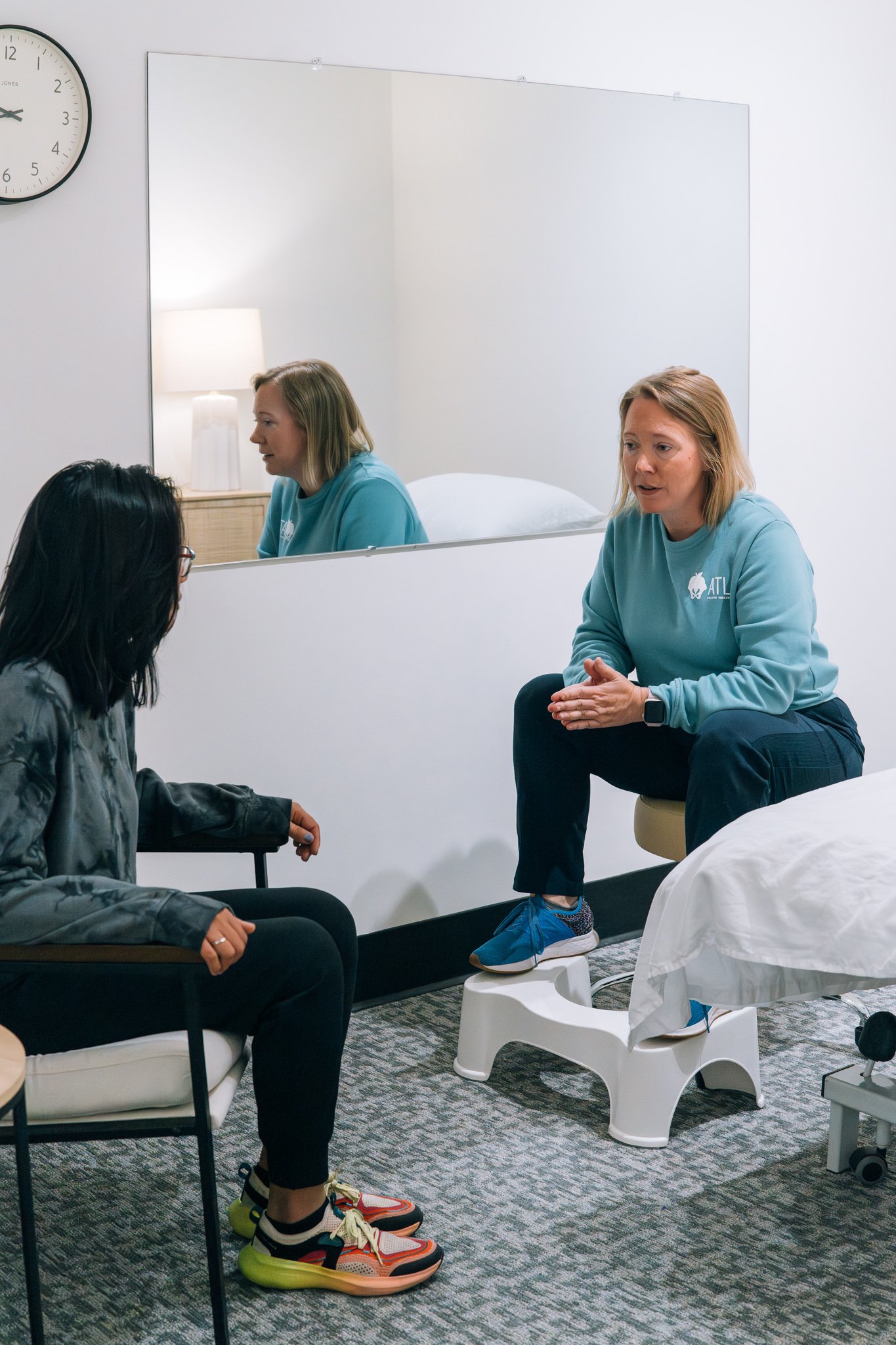
How Constipation and Pelvic Pressure Are Connected
A Full Bowel Takes Up Space: Your rectum sits right behind your vagina. When it's backed up, it can press forward and create a feeling of pressure, fullness or even a bulge.
Straining Pushes Down: Every time you bear down hard to have a bowel movement, you put strong downward pressure on your pelvic floor and the tissues that support your organs. Over months and years, that strain can contribute to prolapse.
A Tight Pelvic Floor Can Block the Exit: To have a bowel movement, your pelvic floor muscles need to relax and open. If they're holding tension or tightening at the wrong time, it's like trying to squeeze through a closed door—so you strain harder.
Signs Your Pelvic Floor May Be Involved
Straining even when your stool is soft
Feeling like you haven't fully emptied
Needing to press on your belly, perineum or vaginal wall to finish (this is called splinting)
Spending a long time on the toilet
Pelvic pressure or heaviness that improves after a bowel movement
Pain with bowel movements
When to See Your Doctor Right Away
Talk to your doctor promptly if you have:
Blood in your stool or black, tarry stools
A sudden change in your bowel habits that doesn't go away
Unexplained weight loss
Severe belly pain, vomiting or being unable to pass gas
A family history of colon cancer, or you're due for a screening
Simple Changes That Help
Get Your Knees Up: Put your feet on a small stool so your knees sit higher than your hips. This straightens the path and helps your pelvic floor relax.
Lean Forward & Relax Your Belly: Rest your elbows on your knees and let your belly soften instead of sucking it in.
Breathe, Don't Bear Down: Try a long, slow exhale, or make a low "moo" or "shh" sound. This gently increases pressure while helping your pelvic floor open.
Don't Ignore the Urge: Holding it trains your body to tune out the signal. Try to go when you feel it, especially in the morning after breakfast, when your gut is naturally most active.
Give It Time, but Not Too Much: Don't rush, but don't sit and scroll for 20 minutes either. If nothing happens in a few minutes, get up and try again later.
Support Your Gut: Drink water throughout the day, add fiber gradually and move your body daily.
How Pelvic Floor Therapy Helps
Constipation isn't always just about diet. At ATL Pelvic Health, we look at the whole system—how your pelvic floor coordinates, how you breathe, your posture and your daily habits.
Pelvic Floor Coordination: With your consent, we assess your muscles and help retrain them to relax and open when it's time to go.
Breathwork & Pressure Management: We teach you how to use your breath to gently move things along without straining.
Abdominal Massage: We can show you simple techniques to support movement through your colon.
Toileting Habits: We help you build a routine that works with your body, not against it.
Reducing Pressure on Your Pelvic Floor: Less straining means less downward force—an important step in easing pressure and protecting against prolapse.
You Don't Have to Keep Straining
Constipation can feel embarrassing to talk about, but you won't surprise us. If bathroom struggles are part of your daily life, there's help available.
Ready to feel more supported in your body? Our team is ready to help!