A Healthier Gut Starts Here: Understanding Constipation and Pelvic Floor Health
Constipation is one of the most common (and least talked about) digestive issues — affecting up to 16% of adults and even more during pregnancy or postpartum. It’s more than just an inconvenience. Constipation can leave you feeling bloated, sluggish, and uncomfortable, impacting everything from your mood to your ability to exercise or enjoy daily activities.
While it’s easy to dismiss as “normal,” ongoing constipation can take a real toll on your pelvic health — and it’s often a sign that your body needs support.
How Constipation Affects the Pelvic Floor
When bowel movements are difficult or infrequent, the body often compensates by straining. Over time, this extra pressure can place significant stress on the pelvic floor muscles — the group of muscles responsible for supporting your bladder, uterus, and rectum.
Chronic straining can lead to issues such as:
Hemorrhoids or anal fissures
Pelvic organ prolapse (when organs like the bladder or rectum drop due to weakened support)
Pelvic pain or tension
Incomplete emptying, making constipation worse over time
Your pelvic floor and bowel function are closely connected — if one isn’t working efficiently, the other often struggles too.
Signs It’s Time to Seek Help
Everyone experiences occasional constipation, but if it’s happening regularly or interfering with your comfort, it’s time to take a closer look.
You may benefit from professional support if you experience:
Fewer than three bowel movements per week
Straining or pain during bowel movements
A feeling that your bowels never fully empty
The need to use manual pressure or specific positions to pass stool
Abdominal bloating or discomfort that doesn’t improve with diet changes
These are signs your pelvic floor and digestive system might need a little retraining — and pelvic floor therapy can help.
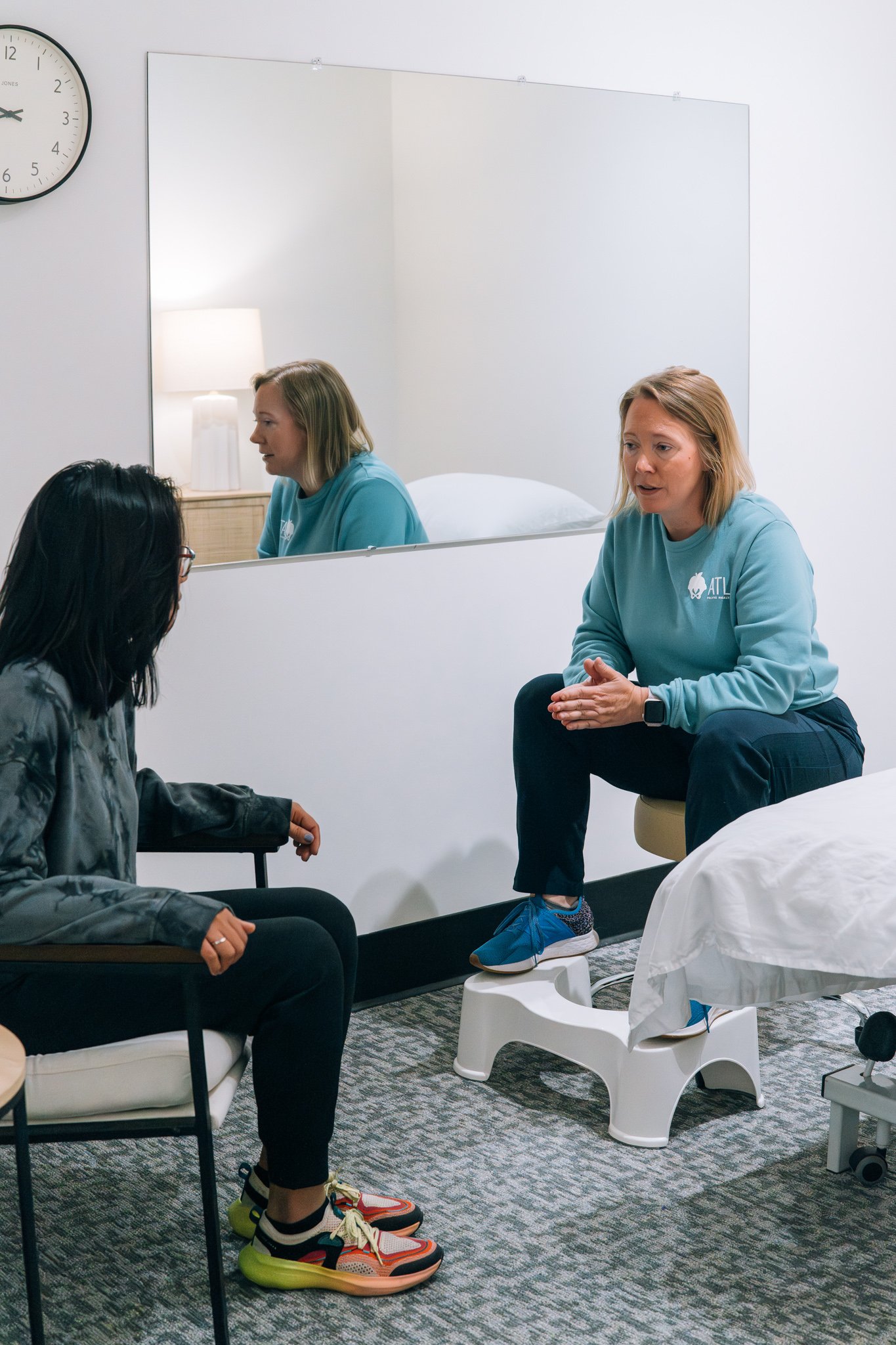
Pelvic Floor Therapy for Bowel Health
At ATL Pelvic Health, we take a holistic approach to bowel health. Pelvic floor physical and occupational therapy focuses on improving coordination, reducing tension, and teaching strategies that make bowel movements more natural and efficient.
During your sessions, your therapist may help you:
Identify and relax overactive pelvic floor muscles that make it hard to release stool
Learn proper toileting posture and breathwork to reduce strain
Improve muscle coordination between your abdomen and pelvic floor
Address abdominal scar tissue or tension that could affect digestion
Build healthy bowel routines through movement, hydration, and lifestyle guidance
Our goal is to help you restore regularity — and confidence — so you can feel comfortable and supported in your daily life.
Healthy Bowel Habits
Simple changes can have a big impact on bowel regularity. Here are some habits we often recommend to our patients:
Prioritize fiber intake — Aim for 25–30 grams per day from fruits, vegetables, whole grains, and legumes.
Stay hydrated — Drinking half your body weight in ounces of water daily keeps stool soft and easier to pass.
Use a squatty potty or footstool — Elevating your feet helps align your body for easier elimination.
Move daily — Even a 20-minute walk at the end of the day helps stimulate digestion.
Breathe and relax — Avoid straining; instead, exhale gently and allow your body to do the work.
Establish a routine — Try to use the bathroom around the same time each day, ideally after meals when digestion is most active.
Constipation is common — but it’s not something you have to live with. Addressing bowel health can relieve discomfort, protect your pelvic floor, and dramatically improve your overall well-being.
If you’ve been struggling with constipation, pelvic pressure, or pain, ATL Pelvic Health can help you uncover the root cause and create a personalized plan to support regularity and long-term gut health.
Take the first step toward a healthier gut — Book your pelvic floor evaluation today and start feeling your best from the inside out.