
You know every bathroom between home and work. You go "just in case" before leaving the house. Sometimes the urge hits so suddenly that you're not sure you'll make it—especially when you get to your front door or put your key in the lock.
If your bladder is calling the shots, you're not alone. Bladder pressure and urgency are incredibly common, but they're not something you have to plan your life around. With the right support, you can retrain your bladder and get your freedom back.
What Does It Feel Like?
A constant feeling of fullness or pressure in your bladder
Sudden, strong urges to pee that are hard to put off
Going more often than every two hours or so during the day
Waking up more than once at night to pee
Leaking on the way to the bathroom
Only peeing a small amount when you do go
Why Does This Happen?
A Bladder That's Been Trained to Go Early: Going "just in case" or rushing at the first twinge teaches your bladder to signal sooner and sooner. Over time, it starts to hold less.
Learn more in Do You Really Have a "Small" Bladder?.
An Overactive or Tight Pelvic Floor: When pelvic floor muscles hold tension, they can irritate the bladder and make it hard to fully empty, leading to frequency and pressure.
A Pelvic Floor That Needs More Support: Weakness or poor coordination can make it hard to hold back an urge long enough to get to the bathroom.
Prolapse: When the bladder shifts lower, it may not empty well, creating pressure and the feeling that you still need to go. Read more about prolapse here.
Hormonal Changes: Lower estrogen in perimenopause and menopause can make bladder and urethral tissues more sensitive.
Bladder Irritants: Caffeine, alcohol, carbonated drinks, artificial sweeteners and acidic or spicy foods can make urgency worse for some people.
Constipation: A full bowel presses on the bladder, adding to pressure and urgency.
When to See Your Doctor
Call your doctor if you have burning with urination, blood in your urine, fever, back or side pain, trouble emptying your bladder, or new leaking with numbness or weakness in your legs. Ongoing bladder pain without infection is also worth a medical evaluation.
What You Can Try Today
Stop Going "Just in Case": Try to go only when your bladder is truly full, roughly every two to four hours during the day.
Calm the Urge Before You Move: When an urge hits, stop and stand or sit still. Take a few slow breaths and do a few quick, gentle pelvic floor squeezes. Wait for the urge to fade, then walk calmly to the bathroom.
Stretch the Time Gradually: If you usually go every hour, try waiting an extra 10 to 15 minutes. Build from there over a few weeks.
Drink Enough Water: Cutting back on fluids makes urine more concentrated and can actually irritate your bladder more. Sip steadily through the day and taper off in the evening.
Notice Your Irritants: Try cutting back on one possible irritant at a time to see what makes a difference for you.
Relax to Empty: Sit fully on the toilet, lean forward slightly and let your pelvic floor relax. Don't push or rush.
How Pelvic Floor Therapy Helps
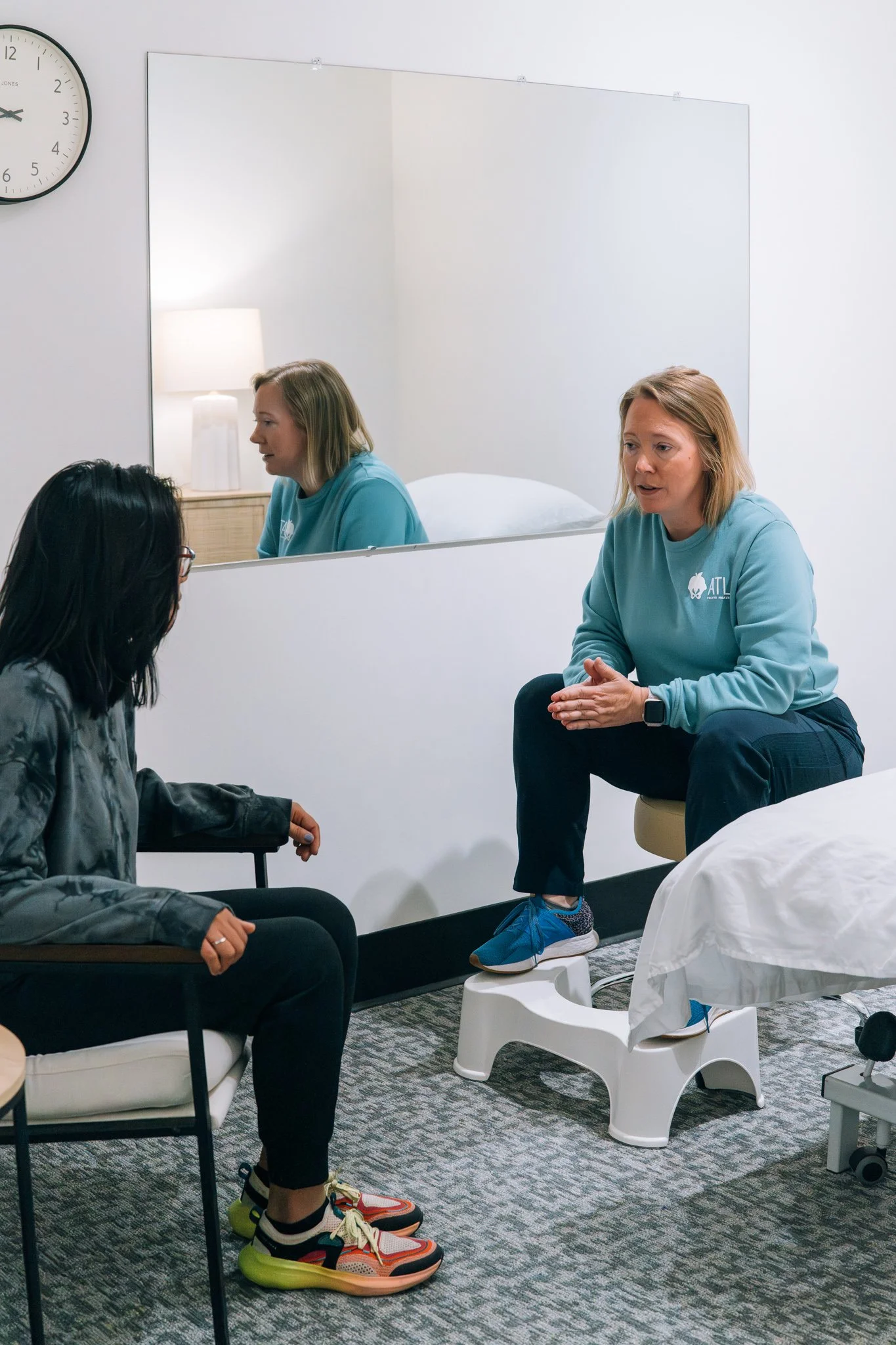
Bladder urgency isn't just a bladder problem. At ATL Pelvic Health, we look at your pelvic floor, breathing, habits and whole body to find what's driving your symptoms.
A Thorough Assessment: With your consent, we check whether your pelvic floor muscles need strengthening, relaxing or better coordination.
Bladder Retraining: A step-by-step plan to gradually increase the time between bathroom trips and calm urgency.
Urge Control Strategies: We teach you how to use your breath and pelvic floor to quiet a strong urge.
Downtraining & Manual Therapy: When tension is part of the problem, we help your muscles let go.
Daily Habits: Fluid, food and bowel habits that help your bladder stay calm.
Stop Planning Your Day Around the Bathroom
You deserve to run errands, travel, exercise and sleep through the night without worrying where the next bathroom is. Bladder urgency is very treatable, and you don't have to wait until it gets worse.
For more everyday bladder habits, read Grateful for a Healthy Bladder.
Ready to feel more supported in your body?
This post is for education and isn't a substitute for medical advice. If you have new or concerning symptoms, talk with your healthcare provider.